By Don Lucey, Misean Cara Project Officer for Livelihoods
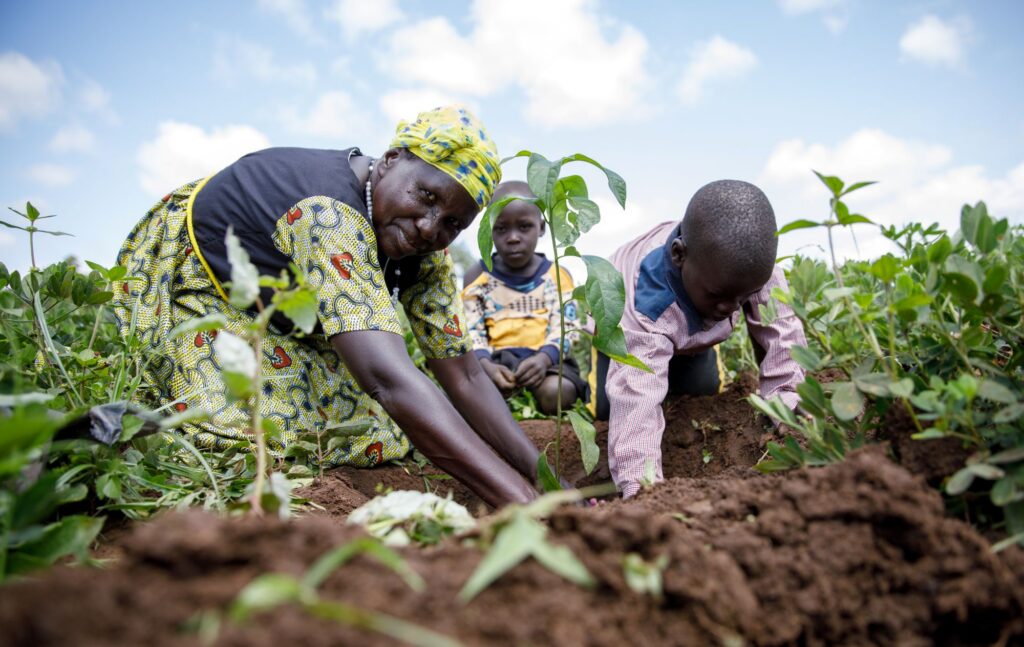
As we mark the 56th Earth Day on April 22nd, the need to protect our planet has never been more urgent. This year’s theme for Earth Day – Our Power, Our Planet – invites us to confront the reality of a changing climate while celebrating the extraordinary work of communities and individuals who refuse to let despair win. For Misean Cara and our missionary member organisations working across forty-three countries, Earth Day is not just a date on the calendar, it is a daily commitment lived out in the fields, forests, schools, and coastal communities of the Global South.
The global picture: a crisis hitting the poorest hardest.
The science is unequivocal. Rising global temperatures, more frequent and intense extreme weather events, biodiversity loss, and ecosystem degradation are all accelerating. Developing countries, where our members serve, are bearing the brunt of climate change despite contributing the least to the problem. Throughout the Global South, climate change-induced droughts are destroying crops, floods are washing away homes and livelihoods, and rising seas are threatening entire coastal communities. Millions of people are now also at increased risk of food insecurity, displacement and health risks linked directly to climate change. The poorest and most marginalised are the first and hardest hit, deepening inequalities that missionaries have long worked to overcome.
Yet amidst these challenges, there is hope. It is rooted in the hands-on, community-led responses of Misean Cara members who draw on Ireland’s missionary tradition steeped in solidarity, justice, dignity and increasingly, care for creation, a vision powerfully echoed in Pope Francis’s Laudato Si’ and carried forward with conviction by Pope Leo XIV.
Papal leadership calling the Church to ecological conversion.
Pope Francis’s landmark encyclical Laudato Si’ (2015) awakened global consciousness to the cry of the earth and the cry of the poor as one. A decade later, Pope Leo XIV has built firmly on this foundation, urging a profound “ecological conversion” that moves beyond words and data to transformative action. In addresses marking the tenth anniversary of Laudato Si,’ Pope Leo stressed that “we must shift from collecting data to caring, and from environmental discourse to an ecological conversion that transforms both personal and communal lifestyles.” He has warned against indifference or ridicule of climate science, reminding the world that “some have chosen to deride the increasingly evident signs of climate change… and even to blame the poor for the very thing that affects them the most.” God, he says, will one day ask us whether we have cared for our common home and for our brothers and sisters.
Pope Leo’s call for unity around integral ecology, his celebration of the first Mass for the Care of Creation, and his insistence that environmental justice can no longer be treated as an abstract goal, resonate deeply with the daily witness of missionaries. His leadership complements Pope Francis’s prophetic voice by emphasising practical solidarity, education of the heart, and urgent political responsibility, precisely the spirit in which Misean Cara members accompany vulnerable communities.
Misean Cara’s response: climate-resilient livelihoods at the heart of our work
In 2024 alone, Misean Cara provided €13.8 million to support 338 projects implemented by fifty-two members, transforming the lives of nearly 1.9 million people. Of this, €2.49 million went to the funding of 102 climate-resilient livelihood projects in twenty-one countries, directly supporting over 106,000 people in adapting to climate change. These initiatives delivered tangible results:
- 36,000 households gained improved livelihood opportunities through sustainable agriculture and skills training.
- 91% of participants reported better diets thanks to increased incomes.
- Members recorded 3,204 specific contributions to climate resilience, from introducing drought-resistant crops and water conservation techniques to rehabilitating land and restoring ecosystems.
These are not isolated efforts. They represent a strategic focus in our Misean Cara Strategy: upholding the right to climate-resilient livelihoods and decent work while restoring ecosystems and promoting renewable energy and adaptation technologies.
Outstanding missionary projects leading the way
Each year since 2020, the Misean Cara Climate Action Awards have recognised the innovation and dedication of our members to addressing the impacts of climate change on the communities they serve. The 2025 awards, announced in November last year, highlighted exceptional work across Asia and Africa.
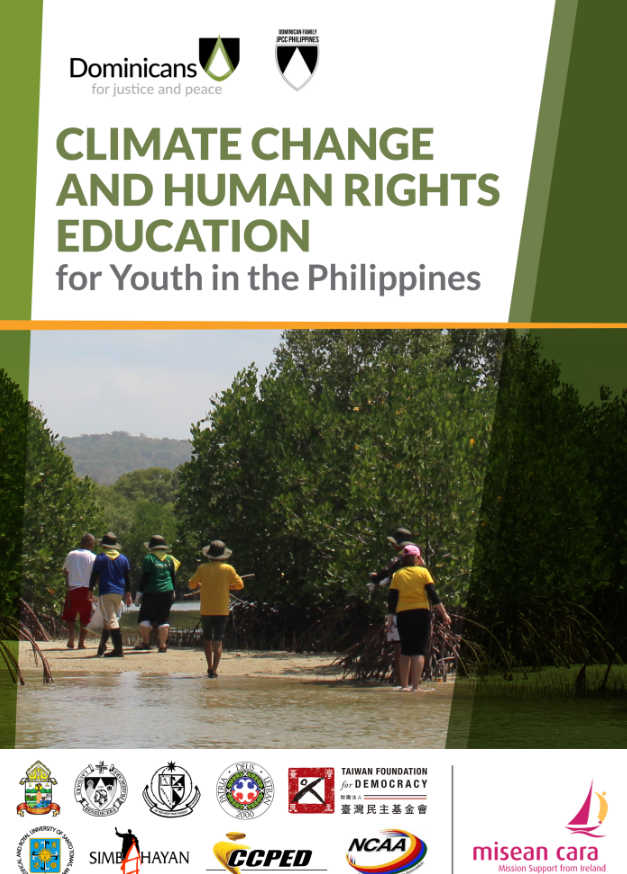
First Place – Dominican Sisters (Philippines)
In the Philippines, the Dominican Sisters project “Mainstreaming Climate Change and Human Rights Education for Youth” has successfully integrated climate education and human rights into a national network of Dominican and partner schools. An innovative handbook, the first of its kind in the Catholic education sector in the Philippines, equipped over one hundred educators and reached more than 9,400 students. Teachers and students went beyond the classroom, launching mangrove conservation, coastal clean-ups, sea-turtle protection and “Zero Plastic Waste” campaigns. The handbook has been presented to the Department of Education and the Commission on Human Rights and was displayed at COP29. Today, trained teachers are cascading the programme independently, building a generation of climate-literate leaders who see environmental protection as inseparable from social justice.
Second Place – Edmund Rice Development (Philippines)
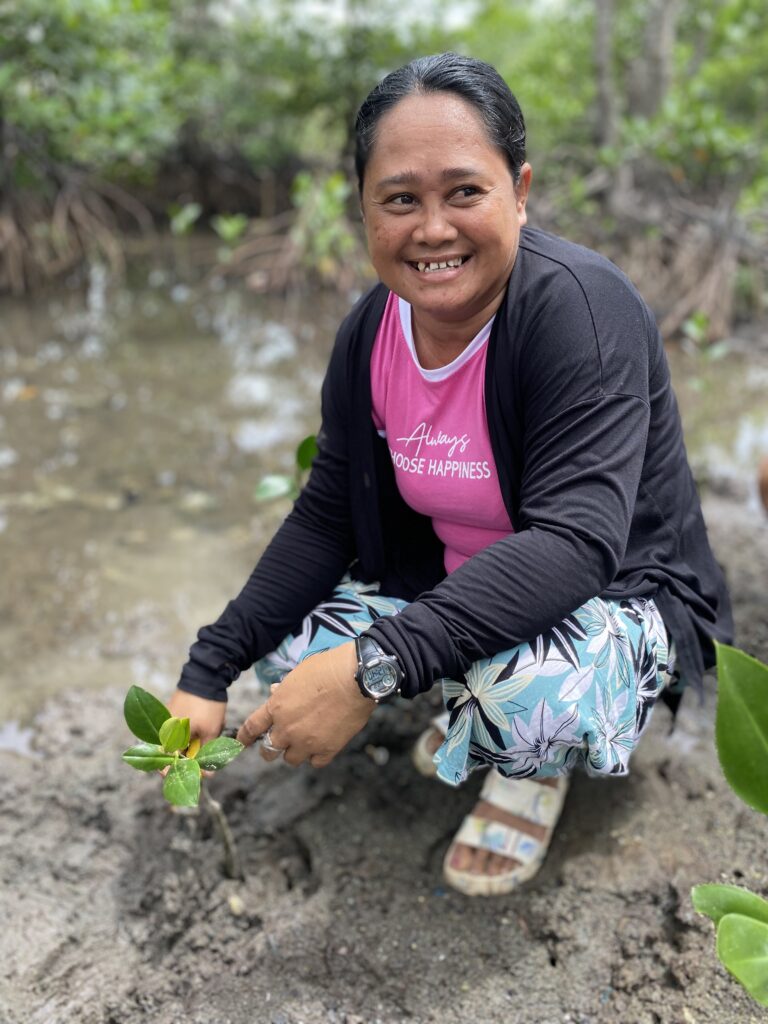
In the coastal municipality of Bato, also in the Philippines, the “Enhancing Mangrove Biodiversity & Disaster Resilience in the Sama-Bajau Community” project has restored over fifteen hectares of mangrove forest with more than 6,800 seedlings. Over one hundred community members (80% women) were trained as “Bantay Bakhaw” (Mangrove Guardians). A community-led nursery, local ordinances protecting the mangroves, and integration of Indigenous Sama-Bajau knowledge have turned vulnerable stilt-house dwellers into active stewards of their ecosystem. The restored mangroves now serve as natural barriers against typhoons and storm surges, carbon sinks, and nurseries for marine life. These initiatives are protecting lives, sustaining fisheries, and providing sustainable livelihoods. As one Sama-Bajau chieftain commented: “Before, mangroves were cut for firewood. Now we plant and protect them because they protect us.”
Third Place – Salesians Don Bosco Ireland (Zambia, Malawi, Zimbabwe)
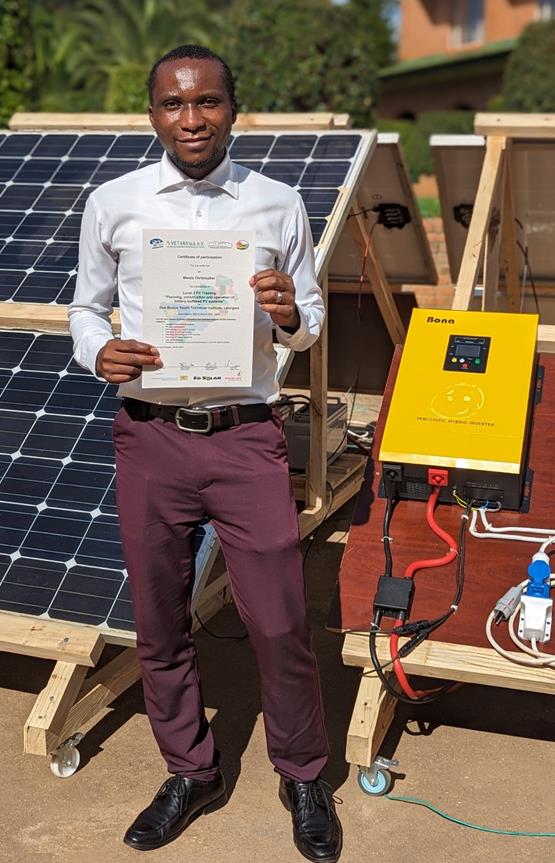
Across Zambia, Malawi, and Zimbabwe, the Salesians of Don Bosco project – “Bridging Innovation & Learning for Marginalised Youth: Environmental Education & Solar Skills Training” – is transforming lives by equipping disadvantaged youth with the skills needed to thrive in a changing climate. Their TVET (Technical and Vocational Education and Training) initiative promotes renewable energy education and environmental stewardship, aligning with the principles of Laudato Si’ and Misean Cara’s strategy for sustainable development.
The project offers specialised training in solar (photovoltaic) technology in four TVET institutions and integrates environmental education into six secondary schools. By building capacity in solar installation and maintenance, young people are gaining access to green employment opportunities or the tools to start their own businesses—helping both livelihoods and the planet.
These three award-winning projects sit alongside many other outstanding initiatives highlighted in our 2024 Annual Report:
- Franciscan Brothers (Uganda) – through the Adraa Agriculture College, farmers are being trained in sustainable agriculture, agroforestry, and clean energy, benefiting over nine hundred households annually with 20% higher incomes and improved nutrition.
- Sisters of the Sacred Hearts of Jesus and Mary (Zambia) – support 2,800 households with climate-smart agriculture and biogas stoves.
- Irish Jesuits International (Malawi) – run the Tasintha Mlimi project, helping vulnerable farmers adapt to changing weather patterns.
- Missionary Sisters of the Holy Rosary (Kenya) – lead the Ifendu Organic Farming and Climate Action project.
- Inter-Congregational Sustainable Agriculture Programme (ICSAP) – a partnership of seven members across Kenya, Uganda, and South Sudan, promotes climate-smart food production and has been running successfully since 2016.
From rainwater harvesting in Paraguay (De La Salle Brothers) to textile and plastic waste upcycling in Kenya (Franciscan Sisters of the Immaculate Conception), and biodegradable waste management in India (Institute of the Blessed Virgin Mary), our members are turning environmental threats into opportunities for dignity, resilience, and hope.
A call to action and gratitude
On this 56th Earth Day, we celebrate not only the beauty of creation but the quiet, determined commitment of missionaries and the communities they serve. Their work proves that when people are empowered with knowledge, skills, and resources, they can adapt, restore, and thrive even in the face of the climate crisis.
Misean Cara remains committed to increasing our focus on climate resilience, ecosystem restoration, and sustainable livelihoods. We are grateful to Irish Aid and all our donors whose support makes this possible. Above all, we thank our members, the missionaries and their dedicated teams on the ground, whose daily witness reminds us that caring for the earth and caring for the poorest are two sides of the same coin.
Together, let us continue to build a more just, sustainable, and hopeful world, one community, one project, one restored mangrove at a time.
For more information on Misean Cara’s work and how you can support it, visit www.miseancara.ie.