By Dario Devale, Misean Cara Project Officer (Human Rights & Advocacy)
Human trafficking has surged in recent years: UN data shows more than 200,000 detected victims worldwide between 2020 and 2023, even as experts warn this is only the visible tip of a much larger problem.1 In a 2024 global human trafficking report by the United Nations Office on Drugs and Crime it is estimated that there was a roughly 25% increase in detected victims in 2022 compared with pre-pandemic 2019 levels.2 Other global estimates of modern slavery further reinforce the scale of exploitation, asserting a 2021 figure of around 49–50 million people living in situations of modern slavery, including forced labour or forced marriage.3 And from accounts of survivors and service-provider studies there is troubling evidence of changes in how trafficking happens — victims are increasingly moved across greater distances and exposed to more intense violence and abuse during captivity.4
This victimisation and exploitation are driven in large part through organised criminal networks, who use sophisticated migration flows, global supply chains, legal and economic loopholes and digital platforms to facilitate cross-border trafficking at a massive scale. They profit from forced labour, sexual exploitation and coercion into criminal activities, such as online scams and drug smuggling.5
Human trafficking takes place in every region of the world, with traffickers particularly thriving in contexts of poverty, conflict, institutional breakdown, and poor coordination between agencies. Women and children are especially at risk, with many ending up in the hands of traffickers after being deceived, forced or abducted. In addition to the trauma of what they experience at the hands of their traffickers, when people are forced away from their homes and families, they often lose their community support networks and end up being socially and culturally isolated. They lack access to basic resources and livelihood opportunities (www.unhcr.org).
Many Misean Cara member organisations are working to address trafficking, despite significant challenges that include factors such as:
- Cultural norms and fear of stigma that make it difficult for survivors and witnesses to speak openly about trafficking, Gender Based Violence (GBV), and related abuses;
- Gaps in guaranteeing effective collaboration, and delays in responding to complex cases;
- Lack of capacity and confidence in handling sensitive cases and challenges in navigating legal procedures;
- Low prosecution rates of traffickers.
Far from being discouraged by these obstacles, our members are making significant contributions to addressing the growing global issue of human trafficking, recognising education and awareness building as some of the most effective tools for long-term prevention, and legal follow-through as an essential component of both justice and deterrence.
Medical Missionaries of Mary – Tanzania & Kenya
In Singida Municipality, Tanzania, the Medical Missionaries of Mary (MMMs) are addressing human trafficking through a holistic approach that combines education, legal advocacy, victim support, and economic resilience.
Singida Municipality covers an area approximately thirty-five km. by thirty km. and situated along a major trucking route, connecting with the port of Dar es Salaam via Dodoma. This route also serves the landlocked countries of Burundi, Rwanda, Uganda, Zambia and the Democratic Republic of Congo. There has been an influx of people migrating into Singida town from surrounding rural areas, which is having an impact on the prevalence of HIV and human trafficking. It is a small town with few industries except sunflower oil processing. In the nearby remote and rural communities poverty is widespread due to the semi-arid climate and sandy soil, which results in poor harvests.
An increase in human trafficking amongst girls and women of 9-22 years and boys and men of 13-25 years, has been observed in recent years, coupled with many cases of GBV, with trafficking into servitude and the sex trade at national and international levels. Municipal leaders asked the MMM’s to assist them in addressing this identifying it as a key priority.
Operating across 18 wards in the municipality, the initiative empowers communities to prevent exploitation and protect human rights.
A key pillar of this work is the JUKWAA (Swahili word for “platform”)- a collaborative forum comprising both government and non-government stakeholders, including social workers, police officers, immigration officials, and prosecutors. The project team conducts educational outreach through public forums, school visits, public meetings, religious institutions, health facilities and household sensitisation visits to raise awareness about human trafficking, GBV, and HIV risks. Families are approached through door-to-door visits to promote reporting mechanisms and strengthen community vigilance and community dialogues are organised to empower residents and amplify survivors’ voices, while reducing stigma around trafficking and gender-based violence.
In Mukuru, Kenya, the MMMs have a project to Counter Human Trafficking (CHT) that is rooted in community empowerment through awareness-building, education, robust inter-agency networks, and active government engagement.
Through the CHT, the MMMs have successfully brought together agencies including law enforcement, the Department of Children Services, immigration, and health officials. This collaboration ensures a coordinated response to try and prevent victims from falling through systemic gaps.
The MMM’s presence in high-level forums—within government circles and the Archdiocese of Nairobi—has contributed to shaping anti-trafficking legislation, influencing budget allocations, and championing survivor-centred reintegration programs.
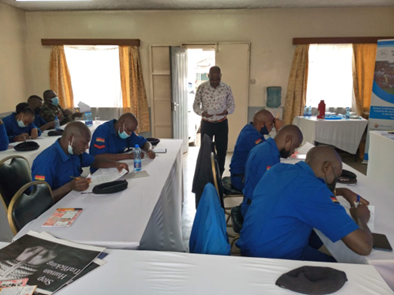
Photo: Medical Missionaries of Mary
The project in Mukuru has been successful in the repatriation and reintegration of over 1600 trafficked victims, arriving back to Kenya from abroad, but also victims within Kenya as well. As part of this survivor support, the MMMs provide help with reintegrating into their communities, including a safe transitional space, psychosocial first aid, vocational training and seed funding for small businesses and income-generating activities. When needed, survivors are also offered extended counselling and trauma support.

Missionary Sisters of the Assumption – South Africa
Although the South African government has demonstrated an overall increase in efforts to combat human trafficking, more still needs to be done, according to the 2024 Trafficking in Persons Report by the US Department of State. Traffickers in the region are recruiting victims from neighbouring countries and South Africa’s rural areas and exploit them into sex trafficking in urban areas such as Johannesburg, Cape Town, Durban and Bloemfontein.
“Traffickers force both adults and children, particularly those from socioeconomically disadvantaged communities and rural areas as well as migrants, into begging, domestic service, mining, food services, construction, criminal activities, agriculture, and the fishing sector”. (6)
Johannesburg is home to one of the largest concentrations of urban refugees in Africa. The situation of women refugees and their children is particularly dire. Most have been victims of sexual assault and violence in their countries of origin. They arrive in South Africa traumatised and in poor health with no source of livelihood and unable to speak English. In South Africa they face xenophobic violence, institutionalised violence and the daily threat of violent crime. They end up as homeless persons on the streets, at risk of abuse, including trafficking.
Bienvenu Shelter is the only shelter in the city that accepts non-nationals, providing safe and secure accommodation to all women who access their services, with a strong emphasis on reducing the risk of human trafficking.
Women are empowered through community dialogue sessions that teach them online safety for their children, risk factors for human trafficking, and information on what they can do if they suspect someone is being trafficked or is at risk of being trafficked and the different forms involved (labour, sex, child trafficking). These events often become opportunities to meet and create connections and support systems for survivors.
To date, 230 women have completed a livelihood skills training course of their choice at the Bienvenue Shelter skills training centre (baking, sewing, beading, cosmetics, manicure). All of them are now financially self-supporting, and able to look after their children. They have had their dignity restored and are now fully integrated, productive members of society. All 230 women attended workshops on human rights, women’s rights, children’s rights, human trafficking and rights to education, health and legal documentation. They now know what their rights are according to South African law, and how to claim and realise these rights. They have been empowered and are no longer afraid to report violations of their rights to the appropriate authorities.
Good Shepherd Sisters – Bolivia
In Bolivia, poverty, inequality, domestic violence and lack of education are creating growing opportunities for traffickers who frequently use social media to deceive victims with false job offers. Girls and young women from rural and poor areas, as well as member of indigenous communities, are disproportionately affected and are the most vulnerable to trafficking for sexual exploitation.
In response, the Good Shepherd Sisters, through the involvement and work of Levantate Mujer Foundation, has launched a comprehensive anti-trafficking initiative in the high-risk area of El Alto, La Paz and Yapacani’.
The project offers direct survivors’ support, awareness and prevention and advocacy. Every year some 50 girls rescued from trafficking receive trauma healing, legal support and life skills development alongside guidance for their families to foster reintegration. In addition, the project has also delivered presentation campaigns to over 3,600 youth and 75 teachers and other community members.
By strengthening community knowledge and collaboration with local authorities and law enforcement, the project not only works to restore the dignity of survivors and ensure their reintegration into a safe environment but also aims to drive systemic change and long-term prevention to address the root causes of human trafficking.
Salesian Sisters – India
Human trafficking in India remains a significant concern, with various forms including forced labour, sexual exploitation, and trafficking of children. The country has been working to strengthen its legal framework and enforcement mechanisms to combat trafficking, but challenges persist.
In India, the Salesian Sisters, in collaboration with their local partner, Auxilium Reach Out, are putting a strong effort into anti-human trafficking awareness as a vital area of community engagement and vigilance.
Shajouba and its six surrounding villages make up a small remote hamlet in the district of Senapati (Manipur, Northeast India), inhabited by the Poumai Naga tribe. The tribals practice traditional slash and burn cultivation without modem irrigation facilities and infrastructure, leading to lower productivity and widespread environmental degradation. Due to the absence of industries and job opportunities, young people migrate to other metropolitan areas such as Delhi, Bangalore, Chennai, etc., where they are at risk of unemployment, racial violence and other harm. In particular, Manipur has emerged as a convenient transit route for international human trafficking. In 2021, 179 trafficked Nepalese (147 women and 32 men), were arrested by the Government in Moreh and Imphal. The survivors were lured with expectations of high income in a foreign land. Iraq, Kuwait, Bengaluru and Delhi are the major destinations of a large percentage of trafficked victims
Village Vigilance Committees have been activated in the project areas recognizing the need to protect community members, particularly the youth, who frequently migrate to other parts of India for higher education and employment. These committees composed of youth leaders, Church representatives, and village elders, play a crucial role in safeguarding their communities.
Community sensitisation is conducted regularly through church announcements, village meetings, and school-based programmes, emphasizing the seriousness of human trafficking and the importance of collective vigilance. These initiatives have fostered a strong culture of alertness, prevention, and shared responsibility. Awareness programmes are conducted by the project staff in active collaboration with the village leaders, strengthening community ownership and long-term impact.
More than 200 women have increased their skills in various sectors (agriculture farms, animal husbandry and weaving units) offering them alternative life paths and livelihoods the help them to transition away from dependency on high-risk situations, including becoming victims of trafficking.
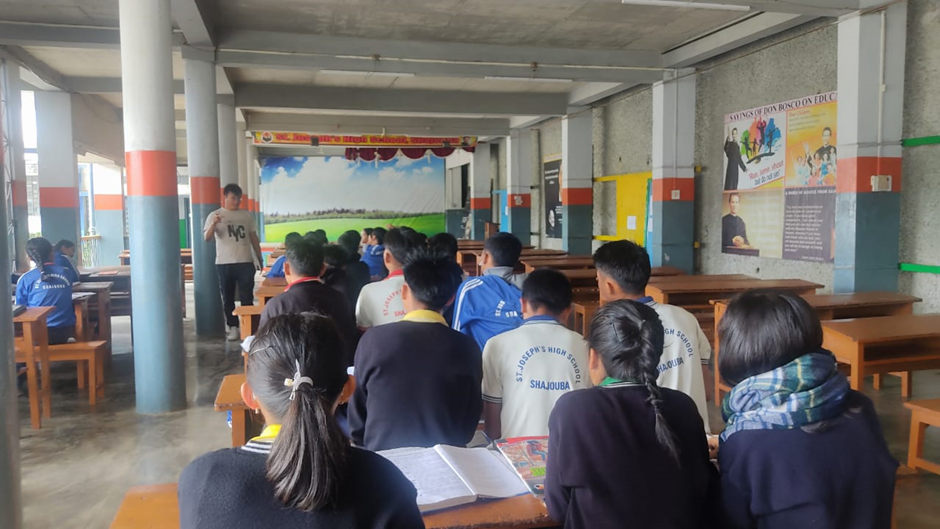
Photo: Salesian Sisters, India
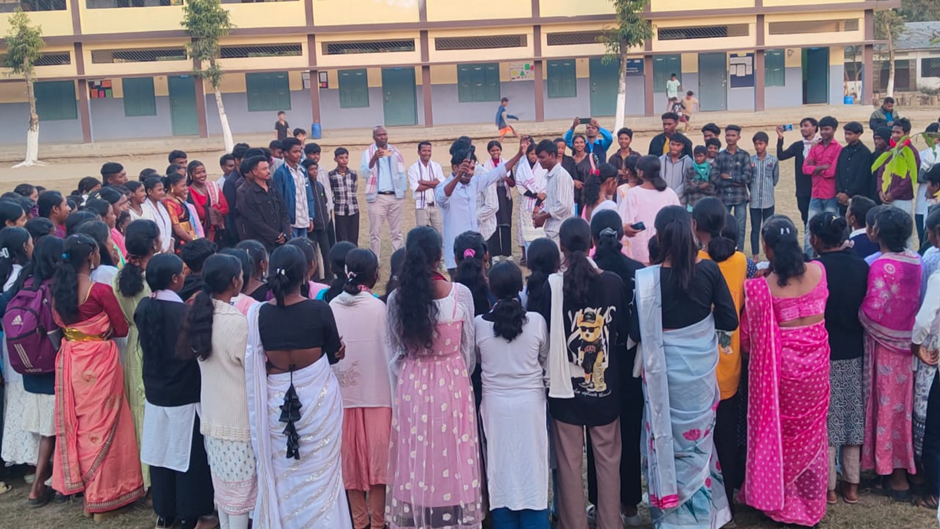
Photo: Salesian Sisters, Northeast India.
Human trafficking remains one of the gravest human rights violations of our time, targeting the most vulnerable—especially children, women, and marginalised adults. While global awareness and policy frameworks are evolving, meaningful progress requires strategic, multi-stakeholder collaboration.
Misean Cara Members and their partners are at the forefront of this engagement, committed to survivors’ dignity, systemic reforms and collaboration at every level of society.
End Notes
1 https://www.un.org/en/observances/end-human-trafficking-day
3 https://www.walkfree.org/reports/global-estimates-of-modern-slavery-2022/
4 https://www.unodc.org/unodc/en/endht/index.html
5 https://www.unodc.org/unodc/en/endht/index.html
6 https://www.citizen.co.za/news/south-africa/crime/2024-human-trafficking-report-south-africa/
You can find below additional reading on the work done on anti-trafficking by other Misean Cara member congregations: